Industries

Products & Services
Why palmiq?
Partners
Resources
In the manufacturing sector, cybersecurity isn't just about protecting data, it's about protecting production itself. When a ransomware attack shuts down a production line, the costs cascade exponentially: missed delivery deadlines, idle workforce, spoiled materials, damaged customer relationships, and regulatory complications. For manufacturers operating critical operational technology (OT) systems, downtime isn't just expensive, it's existential.
This reality has driven palmiq's strategic partnership with Acronis International GmbH, a collaboration that goes far beyond traditional vendor-customer relationships. Together, we're addressing one of manufacturing's most critical challenges: securing legacy OT systems without interrupting the operations they control. This partnership represents our commitment to delivering 360° turnkey solutions that modernize digital infrastructure with cutting-edge, futuristic technology delivered by IT veterans who understand operational realities.
The numbers tell a stark story. According to Statista's 2024 report, more than one-quarter of all global cyberattacks in 2023 targeted manufacturers, the highest percentage of any sector. This isn't a coincidence. Manufacturing facilities present uniquely vulnerable targets because of their operational technology infrastructure. Unlike IT systems that can be updated regularly during scheduled maintenance windows, OT systems control physical processes that cannot afford downtime. These systems, running production lines, managing industrial controls, monitoring critical sensors, operate 24/7/365. Yet paradoxically, many run on platforms the computing world left behind years ago.
Windows XP, for example, remains surprisingly common in OT environments despite being nearly a quarter-century old. Microsoft ended support for this operating system in 2009, meaning no bug fixes or security updates have been issued for fifteen years. These ancient platforms generally cannot run modern cybersecurity software, creating gaping vulnerabilities in otherwise sophisticated manufacturing operations. The challenge extends beyond software. Industrial control systems (ICS) and OT infrastructure often include proprietary hardware and specialized applications for which vendors stopped producing updates long ago. These systems remain the operational backbone of manufacturing facilities worldwide, creating a complex security landscape that demands specialized expertise.
At palmiq, we don't simply resell technology solutions—we forge partnerships that enable us to deliver comprehensive, futureproof protection for our clients. Our relationship with Acronis exemplifies this approach and reflects our broader philosophy of partnering with major technology providers who share our commitment to innovation and client success.
When evaluating cybersecurity partners for our manufacturing clients, we established rigorous criteria. The solution needed to:
Acronis Cyber Protect met all these requirements and exceeded them. But more importantly, Acronis shared our philosophy: cybersecurity isn't about selling products—it's about solving real operational challenges through genuine partnership. This alignment of values makes our collaboration particularly powerful.

.png)

Manufacturing is undergoing a fundamental transformation. Industry 4.0 and Manufacturing 4.0 initiatives are driving closer integration between IT and OT systems, enabling powerful new capabilities like Industrial Internet of Things (IIoT) sensors, cloud-based analytics, and real-time production optimization. This convergence creates tremendous value but also introduces new vulnerabilities. Traditionally, OT systems were "air-gapped", physically isolated from external networks, including the company's own IT infrastructure. This isolation meant a successful cyberattack on IT systems wouldn't affect OT or halt production systems.
That's changing rapidly. A recent survey found that 95% of respondents indicated that Chief Information Security Officers (CISOs), previously focused exclusively on IT, would now participate in OT cybersecurity decision-making, up from 88% the previous year. This shift reflects the growing recognition that IT and OT security must be coordinated, even as they remain distinct disciplines. However, IT and OT are fundamentally different domains with different processes, priorities, and technologies. IT departments regularly update security software and apply vendor-supplied patches, often during scheduled downtime. Many adopt IT-as-a-Service models, effectively outsourcing operations to managed service providers.
OT managers can't do any of that easily. The high cost of OT downtime makes securing these systems extraordinarily challenging. In Statista's 2024 survey, manufacturing executives identified mandatory uptime as the single greatest obstacle to reducing cyberattacks on control systems. This creates a security paradox: the systems most vulnerable to attack are also the systems most difficult to protect using traditional methods. Beyond uptime constraints, other significant challenges complicate OT security. Manufacturing facilities, whether production plants, refineries, power stations, or mining operations, often cannot justify full-time IT staff on-site. Yet sending IT personnel in response to OT system disruptions is costly and time-consuming, potentially extending downtime significantly.
Through our partnership with Acronis, palmiq delivers a comprehensive framework that addresses these multifaceted challenges systematically:
We implement intelligent network segmentation that limits access to critical assets without breaking IT/OT integration. By isolating sensitive OT systems, we reduce the risk of unauthorized access and lateral threat movement from IT to OT environments. Segmentation doesn't necessarily break IT/OT integration but allows managers to control it more effectively, maintaining the benefits of convergence while minimizing security risks.
Every user account receives multi-factor authentication (MFA), adding essential security layers by requiring multiple verification methods. This dramatically reduces unauthorized access risks, particularly important as remote access to OT systems becomes more common for monitoring and troubleshooting purposes.
The zero trust security model is gaining significant traction in OT environments. Zero trust assumes no user or device is inherently trustworthy. Every entry into an OT system must pass security verification. As IT/OT convergence opens new attack vectors toward OT systems, continuous verification and authentication significantly improve security posture. This approach represents a fundamental shift from perimeter-based security to identity-based security.
Modern AI technology plays a crucial role in securing legacy systems. AI-powered monitoring continuously analyzes system behavior and identifies anomalies that might indicate security threats. These systems can then take action to stop or significantly mitigate cyberattack damage before it impacts production, providing a critical layer of protection for systems that cannot be easily patched or updated.
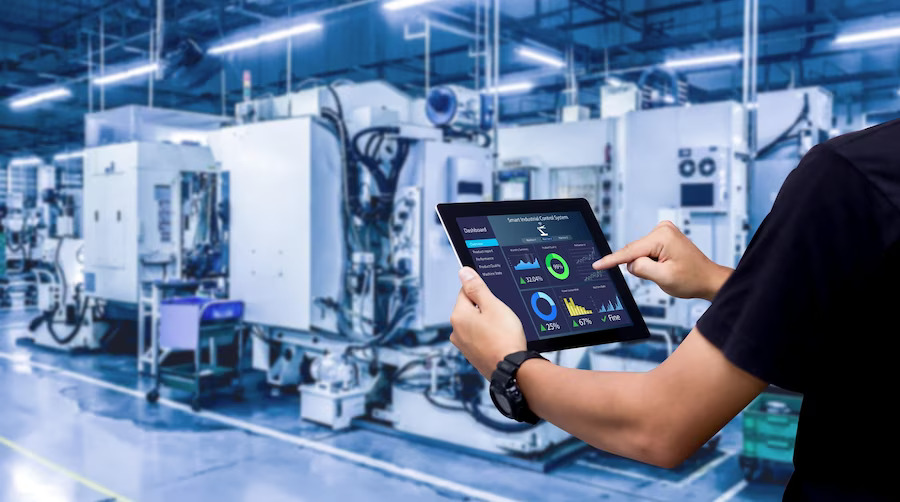
At the heart of our manufacturing cybersecurity solutions lies Acronis Cyber Protect, which offers capabilities specifically designed for OT environments. This platform delivers IT-level data protection for OT systems without the downtime typically associated with IT security measures. It protects OT environments whether they're integrated with IT or remain air-gapped.
1. Universal Restore: This revolutionary feature enables manufacturers to backup and recover systems even when using older, unsupported operating systems. Manufacturers can restore legacy applications on new hardware with necessary drivers automatically installed, massively reducing downtime during recovery operations. This capability is particularly valuable when aging hardware fails and must be replaced with modern equipment while maintaining legacy software compatibility.
2. One-Click Recovery: This exclusive functionality allows local non-IT personnel to rapidly restore OT systems that have failed or been compromised by malware. For distributed manufacturing operations without full-time IT staff at every location, this capability is transformational. It reduces both downtime and associated costs, getting production systems operational quickly after incidents without waiting for specialized technicians to arrive on-site.
3. Backup Without Downtime: This is perhaps the most critical capability for OT environments. Acronis Cyber Protect performs backups without disconnecting OT systems or requiring reboots. Critical security processes don't interrupt production. This feature addresses the essential dilemma of balancing data protection with uptime requirements. With our Acronis-powered solutions, manufacturers achieve both simultaneously, a capability that was previously considered impossible in many OT environments.
What distinguishes palmiq's approach is how we leverage our Acronis partnership to deliver value beyond technology deployment. We don't simply install software and walk away. Instead, we:
This collaborative approach transforms the traditional vendor-customer dynamic into genuine partnership. Acronis provides world-class technology; palmiq provides deep operational understanding, local expertise across government and commercial sectors, and unwavering commitment to long-term client success.
Legacy OT systems aren't disappearing anytime soon, nor should they. These systems represent massive capital investments and, when properly protected, continue delivering reliable performance for years or even decades. The goal isn't replacement, it's protection. Securing them requires specialized strategies that maintain operational integrity while minimizing downtime risk and cyber threats. Through our strategic partnership with Acronis, palmiq enables manufacturers to protect their infrastructure effectively and ensure operational continuity in an increasingly hostile threat landscape.
In an era where cyberattacks on manufacturing are increasing in both frequency and sophistication, manufacturers need more than vendors, they need partners who understand their operational realities and deliver solutions that work in the real world, not just in theoretical scenarios. That's exactly what the palmiq-Acronis partnership provides: futureproof protection from IT veterans who understand that in manufacturing, uptime isn't negotiable, production deadlines are sacred, and security must work within operational constraints, not against them.